


The Seed of an Idea
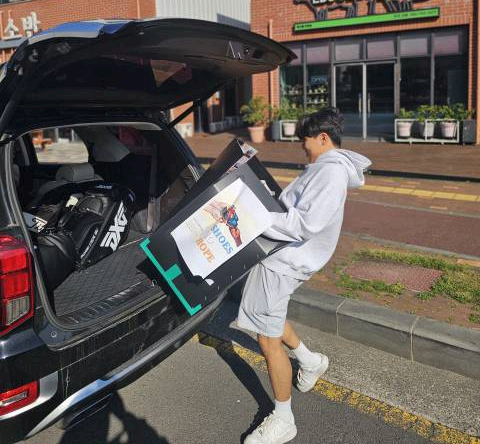
The inspiration for our “Shoes to Hope” campaign came from an observation during our first visit to Hope Hill School in February 2024. As we organized sports activities and educational programs, I couldn’t help but notice that many children were participating barefoot or in shoes that were clearly too small, worn out, or mismatched.
During one particularly active soccer game, I watched a talented young player hesitate before making a crucial run. Later, I realized his reluctance wasn’t about the game—it was about protecting his only pair of shoes from further damage. That moment crystallized something important about sustainable support: sometimes the most impactful help addresses the most basic needs.
Ubuntu Network’s Collective Action

When I brought this observation back to our Ubuntu Network team at St. Johnsbury Academy Jeju, the response was immediate and enthusiastic. Our regular weekly meetings, which had been focused on fundraising and cultural exchange planning, quickly evolved to include practical community engagement right here in Jeju.
The beauty of the “Shoes to Hope” campaign was its accessibility. Unlike complex educational programming or expensive international logistics, this was something every member of our network could contribute to meaningfully. Students could engage their families, teachers could involve their classes, and community members could participate regardless of their background or resources.
We established a simple but comprehensive system: shoes needed to be gently used or new, appropriately sized for children aged 5-15, and suitable for both daily wear and physical activities. The focus on quality over quantity reflected our growing understanding that sustainable support means providing items that will genuinely improve lives rather than simply checking boxes.
Community Engagement Strategy
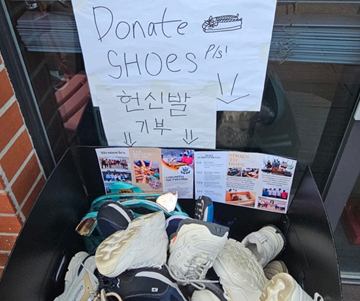
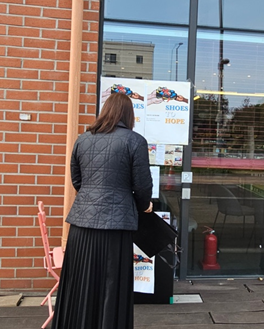
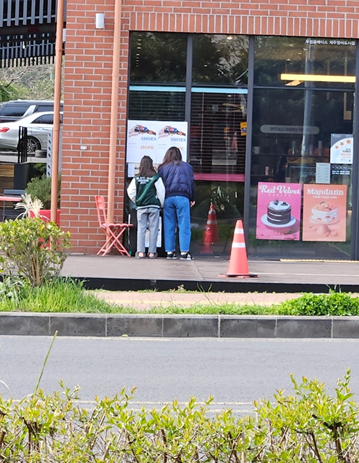
Our approach to community engagement had evolved significantly since Ubuntu Network’s early days. Rather than simply asking for donations, we developed educational components that helped people understand the impact of their contributions. Each collection point included information about Hope Hill School, Uganda’s educational challenges, and the specific ways that proper footwear supports children’s academic and physical development.
The response from the Jeju community was overwhelming. Parents cleaned out closets and discovered shoes their children had outgrown but that were still in excellent condition. Local businesses offered to serve as collection points. Teachers incorporated lessons about global education equity into their curricula, using our campaign as a concrete example of international cooperation.
What surprised us most was how the campaign sparked conversations about needs and privilege within our own community. Students began discussing the assumption that everyone has access to proper footwear, leading to deeper awareness about economic disparities both locally and globally.
The Psychology of Giving
One aspect of the campaign that particularly interested me, given my focus on sports psychology, was observing how different people approached the act of giving. Some donors were very methodical, carefully selecting shoes and including notes about their condition or intended age range. Others contributed more spontaneously, bringing bags of mixed items and trusting our team to sort appropriately.
The psychological impact on our Ubuntu Network members was equally fascinating. Taking on the responsibility of evaluating, cleaning, and organizing hundreds of pairs of shoes required attention to detail and quality control that translated into other areas of our work. Team members became more thoughtful about resource management and more appreciative of the logistics involved in effective aid delivery.
This hands-on experience with material aid also influenced our thinking about educational programming. Just as we were careful to provide shoes that were appropriately sized and durable, we needed to ensure our educational activities were appropriately designed for their context and sustainable over time.
Quality Over Quantity
As our collection grew, we faced important decisions about standards and selection criteria. It would have been easy to simply count every donated item toward our goal, but our commitment to sustainable support meant being selective about what we ultimately sent.
Our final collection of 200 pairs represented not just quantity, but careful curation. Each pair was inspected for durability, appropriateness, and potential longevity. We prioritized versatile shoes that could work for both classroom settings and physical activities, understanding that many Hope Hill students wouldn’t have the luxury of multiple pairs for different purposes.
The process of sorting and selecting also became an educational experience for our team. We learned about different types of footwear, appropriate sizing across age ranges, and the practical considerations of shipping materials internationally. These skills would prove invaluable as we planned more complex logistical operations for future projects.
Building Anticipation and Connection
Throughout the campaign, we maintained regular communication with our contacts at Hope Hill School, sharing updates about our progress and receiving feedback about specific needs and preferences. This ongoing dialogue helped ensure that our efforts would be well-received and appropriately distributed.
BALUNGI DICKSON KIGOZI’s feedback was particularly valuable. He helped us understand cultural considerations around gift-giving and suggested ways to present the shoes that would maximize positive impact while respecting local customs. His guidance reinforced our commitment to partnership-based rather than charity-based approaches.
The anticipation building toward our June 2025 return visit added emotional weight to every pair of shoes we collected. These weren’t just donated items—they were concrete expressions of connection between Jeju community members and Ugandan children who would benefit from proper footwear.
Integration with Broader Goals
The “Shoes to Hope” campaign never existed in isolation from our broader educational and community development goals. From the beginning, we designed it to complement and enhance our other programming rather than compete for attention or resources.
The timing was strategic—collecting shoes throughout early 2025 allowed us to build community engagement and anticipation for our HopeHillBloom visit while also providing concrete preparation for enhanced sports programming. Children with proper footwear would be able to participate more fully in the physical activities we planned to introduce.
The campaign also served as a bridge between our advocacy work following Seoul Africa Festival 2024 and our preparation for deeper community engagement in Uganda. It allowed us to maintain momentum while developing organizational skills and community relationships that would benefit all our future initiatives.
Measuring Impact Beyond Numbers
While the final count of 200 pairs provided a satisfying concrete achievement, the campaign’s impact extended far beyond numerical targets. For Ubuntu Network members, managing a sustained community engagement project over several months developed project management skills, community relations experience, and deeper understanding of cross-cultural collaboration logistics.
For the Jeju community, the campaign provided an accessible entry point into global education issues and international cooperation. Many donors expressed interest in learning more about Ubuntu Network’s other activities, expanding our local support base and creating opportunities for future collaboration.
Perhaps most importantly, the campaign reinforced our commitment to sustainable, partnership-based approaches to international engagement. By taking the time to collect quality items and plan appropriate distribution, we demonstrated respect for both our donors and our recipients while maximizing positive impact.
Preparing for Delivery
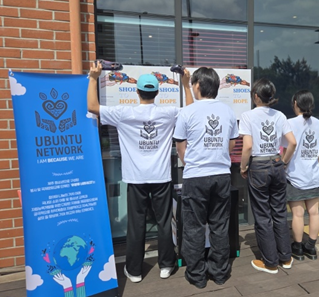
As our June 2025 departure date approached, the 200 pairs of carefully selected shoes represented more than successful fundraising—they embodied months of community engagement, cross-cultural learning, and collaborative planning. Each pair carried with it the good intentions of Jeju community members and the careful attention of Ubuntu Network members who had managed the collection and selection process.
The shoes would be more than practical items when we arrived at Hope Hill School. They would be tangible symbols of connection between communities separated by thousands of miles but united by shared commitments to education, opportunity, and mutual support.
The success of “Shoes to Hope” provided confidence and experience that would prove crucial as we prepared for our most ambitious community engagement project yet. We had demonstrated our ability to mobilize local resources, maintain quality standards, and coordinate complex logistics while building meaningful relationships across cultural boundaries.
The foundation of sustainable support systems we had built through this campaign would serve us well as we prepared to deepen our partnerships and expand our impact through HopeHillBloom 2025.
Next: Armed with 200 pairs of shoes and months of preparation, we return to Hope Hill School for our most comprehensive community engagement project, ready to deliver both material support and enhanced educational programming.
About this series: This post is part of my ongoing documentation of community engagement and sports-based advocacy work. Follow along as we explore the intersection of sports psychology, cultural exchange, and inclusive athletics.


